
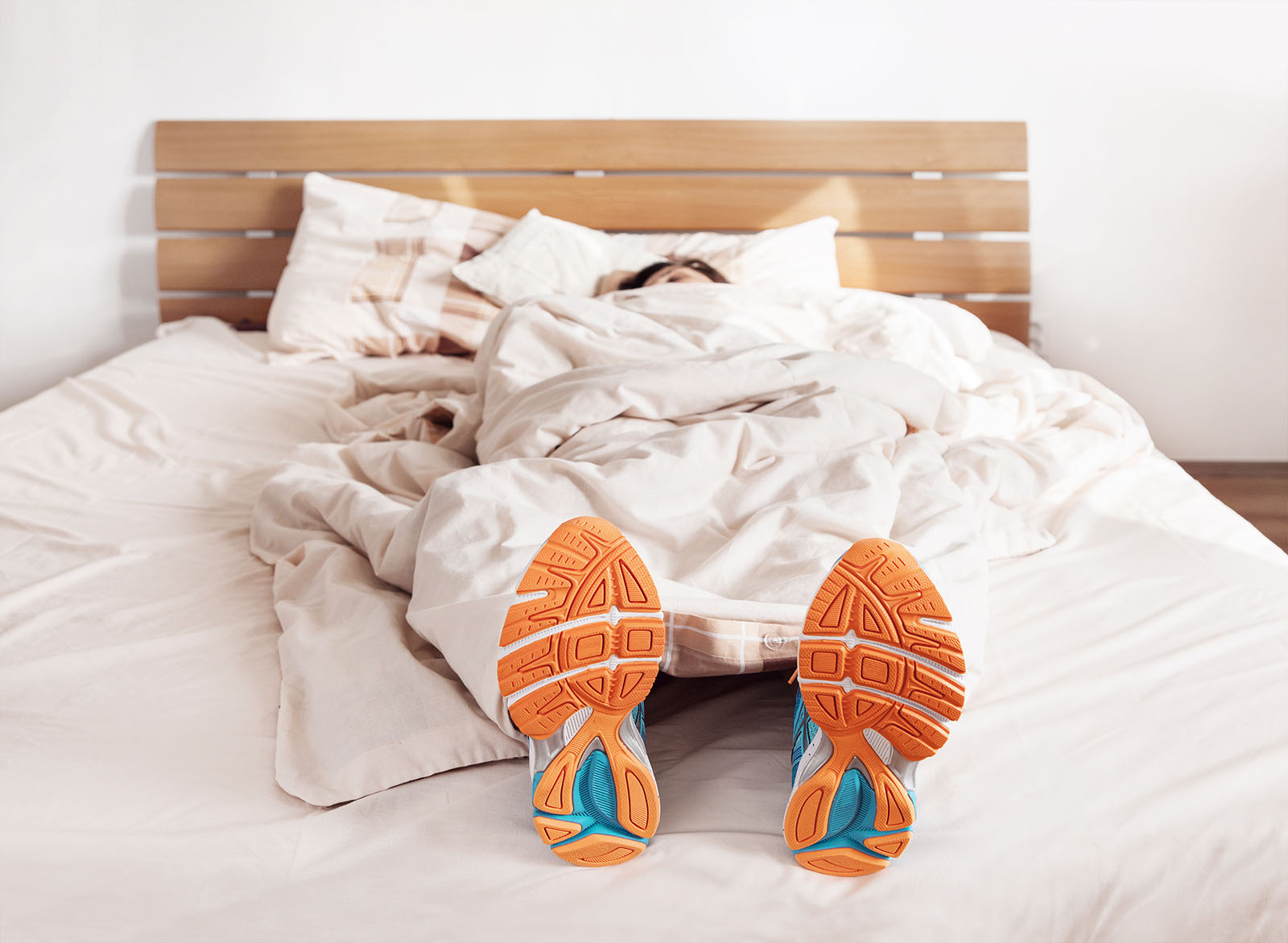
It’s widely understood that regular exercise is essential for the health of our minds and bodies, helping each of us maintain a healthy weight and support all of the body’s systems, including encouraging optimal heart, lung, muscle, bone, and brain function.
Have you considered the role exercise plays when it comes to healthy, deep sleep?
Can exercise reduce snoring?
KEY INSIGHTS
- Regular exercise is crucial for overall health and well-being. It also greatly influences sleep health and naturally regulates the sleep cycle to improve sleep quality.
- Getting regular, moderate aerobic exercise has been shown to boost the amount of time spent in deep sleep. This helps relieve stress, stabilise mood, alleviate the symptoms of sleep disorders, and reset the body clock to support a smooth transition to sleep.
- Regular exercise also helps reduce snoring by facilitating healthy weight maintenance and improving cardiac and respiratory health.
- You can perform targeted exercises to help strengthen the airway and the muscles of the mouth and throat. This helps reduce snoring and may even help alleviate obstructive sleep apnea. Using the right snoring mouthpiece is also a wise idea.
How do you like to exercise? From working out at the gym or doing active yoga, going snow skiing or swimming, hiking or cycling, playing a team sport or rowing, even just taking a brisk walk in your local suburb: getting regular exercise is essential for the health of your body and mind.
It’s also a great way to improve your sleep quality – and even potentially reduce snoring.
How Does Exercising Improve Sleep Quality?
Medical researchers have revealed solid evidence that regularly exercising significantly improves sleep quality. Moderate to vigorous aerobic exercise (e.g. walking, jogging, running, skiing, rowing, swimming, hiking, cycling, dancing, gardening, playing football) increases the amount of deep sleep we get at night. This sleep phase is most rejuvenative and important for reducing stress, stabilising mood, and enabling us to relax and transition into sleep more easily.
How does this work?
- Doing aerobic exercise raises both the heart rate and the breathing rate over a sustained period. In response to this, the body releases endorphins, which are feel-good chemicals that promote wakefulness for the next hour or two after the activity has ended.
- Exercising raises the core body temperature. This temperature rise (which lasts up to 90 minutes) sends signals to the brain that it’s time to be wide awake.
- Declining endorphin levels and core body temperature an hour or two after finishing exercising can result in feeling sleepy.
Most doctors recommend getting moderate aerobic exercise for at least 30 minutes on at least 5 days every week; this is required for optimising your overall physical and mental health. It will also significantly improve your sleep quality, which has its own health and wellness rewards.
How Does Exercise Help Reduce Snoring?
Exercising regularly is a very powerful way to help manage weight and build and strengthen muscle.
Being overweight or obese is a major contributor to habitual snoring and developing sleep apnea, which is a serious medical condition. Alongside a healthy diet and better lifestyle choices, exercising regularly is essential for maintaining a healthy weight and losing excess fat if you are overweight. Getting regular aerobic exercise also helps keep the nasal passages clear, which can help enormously if your snoring is caused by nasal congestion.
Of particular concern is carrying excess fat in the neck. Fat distribution of this type can impact anyone who is overweight, but some people are genetically more likely to carry fat in their neck. This causes the airways to become narrower and even compressed, directly contributing to snoring.
Losing weight can help open the airways. Exercising also helps tone and build stronger muscles; with stronger muscles in the neck, the tissues of the airways are less inclined to vibrate and cause snoring.
What About Targeted Exercises for Snoring?
Oropharyngeal exercises specifically target and strengthen the muscles in the face, mouth, and throat. They can also help encourage proper tongue posture and improve breathing, especially during sleep. The improved muscle tone that results helps to reduce narrowing and blockage of the airways that cause snoring.
Try these simple exercises:
- Open your mouth wide and hold this position for 5 seconds.
Close, then repeat 10 times.
Do this up to 3 times daily to help tone the muscles of the mouth and throat. - Stretch and tone your soft palate: open your mouth as wide as you comfortably can and say “aaahhhh”.
Hold for 20 seconds.
Close your mouth, wait 5 seconds, and repeat 10 times. - Poke your tongue out as far as possible.
Hold for 10 seconds, then relax.
Repeat 10-15 times, 3 times daily. This helps strengthen and stabilise the tongue. - Put the tip of your tongue against the back of your front teeth.
Slowly slide your tongue back along the roof of your mouth as far as possible.
Repeat 5-10 times. - Sing – loud and proud!
This is a fun, easy way to really strengthen and tone your throat.
Summing Up!
Regular exercise:
- Resets the sleep-wake cycle
- Regulates serotonin, melatonin, cortisol, and endorphins – all are hormones that play a role in sleep
- Regulates core body temperature
- Alleviates anxiety and stress
- Moderates energy and reduces fatigue
- Enhances sleep quality
Reduce Snoring with the Right Snoring Mouthpiece
Most snorers want to stop, and are seeking a quick, easy fix, as making lifestyle changes and exercising can take time to show results. Using what is arguably the best sleeping mouth guard in NZ is a savvy way to get fast results! You can reduce or potentially even prevent snoring altogether when you use ApneaRx.
The ApneaRx snoring mouthpiece is worn in the mouth during sleep. It effectively helps to open the airways by gently moving the lower jaw slightly forward; this prevents the soft tissue vibrations that cause snoring. The ApneaRx is also an approved sleep apnea device in New Zealand to help treat symptoms associated with mild to moderate sleep apnea.
Don’t you deserve to get a better night’s sleep?